* 主體類型
* 企業名稱
* 信用代碼
* 所在行業
* 企業規模
* 所在職位
* 姓名
* 所在行業
* 學歷
* 工作性質
請先選擇行業
您還可以選擇以下福利:
行業福利,領完即止!

下載app免費領取會員







步入空間,先觸碰的是時光的溫度。民國風建筑靜佇江畔,深灰墻面沉淀歲月滄桑,卻被一道石庫門流水幕墻的靈動悄然化解。
Upon entering, one first touches the warmth of time. The Republican-era building stands quietly by the river, its deep gray walls bearing the weight of years, softened by the lively flow of a water curtain embedded within a Shikumen-style stone gate.


水幕垂落,磚石之靜與流水之動彼此唱和,如《繁花》中至真園的霓虹流轉,在虛實交錯間演繹“以靜制動”的東方智慧。建筑從未與江河分隔,它只是水波的另一種形態吟唱。
As water cascades down, the stillness of brick and stone harmonizes with the motion of flowing water, reminiscent of the neon glow of Zhen Yuan in Blossoms Shanghai, embodying the Eastern wisdom of “stillness within motion” through the interplay of reality and illusion. Architecture was never separate from the river—it simply sings in another form of water’s rhythm.


禧樽的設計是一場“守”的修行。遵循原有肌理,持守中軸對稱的禮序,門窗開合間延續尺度里的包容;
Xizun’s design is a practice of “restraint.” Honoring the original structure, it adheres to the symmetrical order of axial balance, extending the inclusiveness of Chinese proportions through the opening and closing of doors and windows.


以現代園林筆法重構場域記憶,光影回廊串聯起漫游意境——步移景異間,“身居鬧市而得江流之勝”的古雅,翩然復蘇。
With the brushstrokes of modern garden design, it reconstructs the memory of the space. Light and shadow corridors string together a wandering mood—where every step reveals a new view, reviving the ancient elegance of “dwelling in the bustling city while embracing the beauty of the river.”


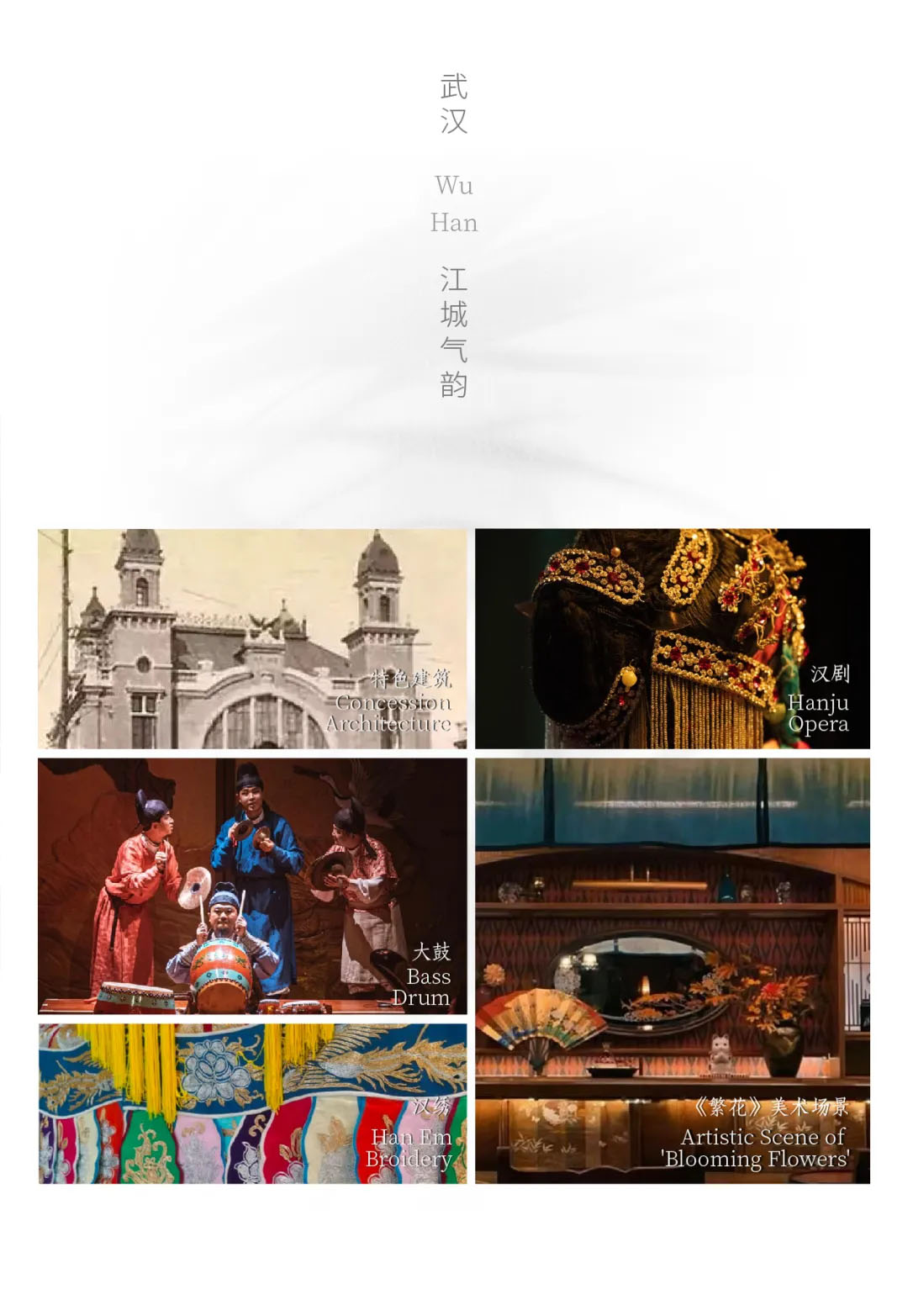
正如《繁花》中以細膩布景還原時代氣息,此處亦以青石板、矩形漏窗和漢繡屏風,織就一幕幕可觸可感的江城場景。
Much like Blossoms Shanghai’s meticulous recreation of era-specific atmospheres, here, bluestone pavers, rectangular lattice windows, and Han embroidery screens weave tangible scenes of Wuhan’s river city.


建筑為骨,細節為魂。禧樽的肌理中隱匿著與《繁花》美學同源的江城密碼:檀木溫潤與玉石清冽,碰撞出雅致韻律;
Architecture forms the bones; details animate the soul. Hidden within Xizun’s textures lies a river city code akin to the aesthetics of Blossoms Shanghai: the warmth of sandalwood contrasts with the coolness of jade, creating an elegant rhythm.

煙熏灰的沉靜、中國紅的熾烈、仿銅金的暖煦,將吉祥寓意織入空間經緯——并非刻意裝飾,而是文化本身的顯影。
The tranquility of smoked gray, the fervor of Chinese red, and the warmth of copper-gold weave auspicious meanings into the fabric of the space—not as deliberate decoration, but as a revelation of culture itself.


色彩成為隱喻,以濃烈色調構建敘事張力:煙熏灰如江灘暮色,中國紅似碼頭燈火,仿銅金若租界舊墻,諸色交織,共譜武漢的“城市色譜”。
Colors become metaphors, much like the narrative tension built through vibrant hues in Blossoms Shanghai: smoked gray resembles dusk over the riverbanks, Chinese red evokes the glow of port lights, and copper-gold echoes the aged walls of the concessions. Together, they compose Wuhan’s “urban color palette.”


暮色浸染江灘,江漢關鐘聲與老租界穹頂在晚風中依稀浮動。燈籠漸次點亮,溫黃光暈拂過青磚、掠過水幕,“新楚菜,宴故知”的字樣泛著柔光。
As dusk dyes the riverbanks, the chimes of Jianghan Custom House and the domes of the old concessions seem to float in the evening breeze. Lanterns gradually light up, their warm yellow glow brushing against blue bricks and gliding over water curtains. The words “New Chu Cuisine, Feasting Old Friends” emit a soft radiance.


真正的文化傳承從不復刻過去,而是讓歷史成為當下的底蘊。
True cultural inheritance never replicates the past—it lets history become the foundation of the present.


正如《繁花》以現代影調重構時代記憶,這里亦以空間為語言,將建筑、江流、佳肴與美學,共同撰寫成一個時代的東方故事。
Just as Blossoms Shanghai reconstructs era memories with modern cinematography, here, space becomes the language, weaving architecture, the river, cuisine, and aesthetics into an Eastern story of our time.


風拂過回廊,傳來兩江交匯的沉吟:
美,本就是生長于煙火中的詩。
The wind sweeps through the corridors, carrying the murmur of two converging rivers:
Beauty, in essence, is poetry born from the vibrancy of life.


來源:本文由劉道華建筑設計事務所提供稿件,所有著作權歸屬劉道華建筑設計事務所所有。
本文版權歸腿腿教學網及原創作者所有,未經授權,謝絕轉載。

猜你喜歡

建筑賞析|層疊引入的空間——INFOLD洛杉磯辦公空間

BIM建筑|上海久光中心,城北商業地標 / 日本設計+同濟院+UNStudio

建筑賞析|GardenNomad,從一畝園到PudongVilla

BIM建筑|建筑地圖257|哥德堡:瑞典式優雅

BIM建筑|經典再讀232|巴特羅之家:浪漫的建筑

BIM建筑|日建設計+高力國際入圍方案:上海浦東金橋副中心東部片區城市設計
最新課程


推薦專題